

An Interview With Savio P. Clemente
In today’s fast-paced world, children face numerous challenges that can impact their emotional well-being. Developing resilience is key to helping them navigate these obstacles and grow into emotionally strong individuals. How can parents, educators, and caregivers foster this resilience in children? As part of this interview series, we had the pleasure to interview Mara James.
Mara James is an author, visionary, entrepreneur, and advocate for all things mental health. She is dedicated to empowering others to rise above life’s challenges and embrace the truth that healing is possible. After her family faced mental health challenges, she founded the Extraordinary Lives Foundation to focus on Children’s Emotional Wellness.
Thank you so much for doing this with us! Before we dig in, our readers would like to ‘get to know you’. Can you tell us a bit about your background and your backstory?
I grew up in New York and relocated to California with my husband and three children in 2007. In 2014, I unexpectedly experienced a mental health issue — which was both scary but ultimately beautiful as it served as my spiritual awakening.
Through my personal battle with mental health challenges, along within my family members, I become passionate about giving others tools and resources to help them heal and transform their lives, focusing on children and their families.
Can you share a story with us about what brought you to your particular career path?
I experienced a mental health issues at the same time as the Isla Vista shooting occurred. My oldest son was a freshman at UC Santa Barbara and a friend was a victim. The combination of those two events underscored the need to improve mental health for adults and children.
Can you share with our readers a bit about why you are an authority on raising resilient kids? In your opinion, what is your unique contribution to this field?
I have successfully raised 3 young adults through the challenges of Asperger’s, ADHD, anxiety and depression. It wasn’t easy but with the assistance of a great team of holistic healers, my children are doing phenomenally.
Do you have a favorite “Life Lesson Quote”? Do you have a story about how that was relevant in your life or your work?
Yes! Our children are reflections of what needs to be healed and transformed in ourselves. They are like little mirrors. I now realize that undiagnosed anxiety has had a direct, negative impact on all of our children. The good news is that as my husband and I worked on healing ourselves, our children were positively impacted.
Ok, thank you for all that. Now let’s move to the main focus of our interview. How can parents handle situations when a child faces failure or disappointment? What strategies can parents use to help a child bounce back?
When children face disappointment, parents can validate their feelings, then guide them to see that setbacks can be used as stepping stones, helping to build resilience and confidence.
What role does parental modeling of resilience play in the development of emotional strength in children? Can you share an example of a resilient parenting moment that you experienced directly or that you have come across in the course of your work?
Children learn resilience by watching their parents; when parents model healthy coping and perseverance, kids internalize those behaviors and build their own emotional strength. However that resilience can also come from life experiences, mentors, friends, therapy, or even from within themselves. Many people who didn’t see resilience modeled at home are still able develop it by facing challenges, learning coping strategies and choosing to grow through adversity. For me, both of my parents were mentally ill and, thankfully, I was able to grow as a result of this adversity.
What approaches do you recommend to foster a growth mindset in children, encouraging them to see challenges as opportunities to learn?
To foster a growth mindset, I encourage parents to praise effort over outcome and normalize mistakes as part of learning. When children see challenges framed as opportunities, they can build resilience and confidence.
Get Savio P. Clemente’s stories in your inbox
Join Medium for free to get updates from this writer.
How can parents balance providing support with allowing their children to experience and overcome difficulties on their own?
Parents can balance support and independence by providing a safe and encouraging presence, offering guidance when needed, but also stepping back to let children problem-solve and build confidence through their own experiences.
What self-care practices would you recommend for parents to maintain their own resilience while going through the everyday challenges of raising children?
Parents can maintain resilience by prioritizing self-care; getting enough rest, eating well, exercising, practicing mindfulness, seeking support from friends or groups, and taking time for hobbies or breaks to recharge. As the standard airline safety instructions tell us, “Put on your own oxygen mask before assisting others.”
Can you please share “5 Strategies To Raise Children With Resilience and Emotional Strength”?
1. Model Resilience — Show how to stay calm during challenges. For example: If you spill your coffee, clean it up calmly and say, everyone tends to spill things and that is okay.
2. Encourage Problem-Solving — Let kids tackle age-appropriate challenges. For example: Instead of tying their shoes, guide them to do it themselves and cheer for their efforts.
3. Praise Effort, Not Just Results — Celebrate persistence and courage. For example: After participating in a recital or sport, if they make a mistake, say: “I love how hard you practiced!”
4. Teach Healthy Coping Skills — Help kids manage strong emotions. For example: Once they calm down after becoming upset, have them take deep belly breaths and reflect on one thing they did well. Even better, make it a game and breath along with them!
5. Foster a Growth Mindset — Turn challenges into learning. For example: If a child is struggling with math, you can say to them that each mistake helps your brain grow — let’s try a new approach.
How can mindfulness and emotional regulation techniques be incorporated into daily routines to support children’s emotional resilience?
The best way to incorporate mindfulness and emotional regulation techniques into our children’s daily routines is to find something they love to do and do it together! For example, practice deep belly breaths, name different emotions, take mindful pauses during transitions, and use calming routines like journaling or stretching.
Are there any specific tools or resources (books, apps, courses) you recommend for individuals looking to improve in this area?
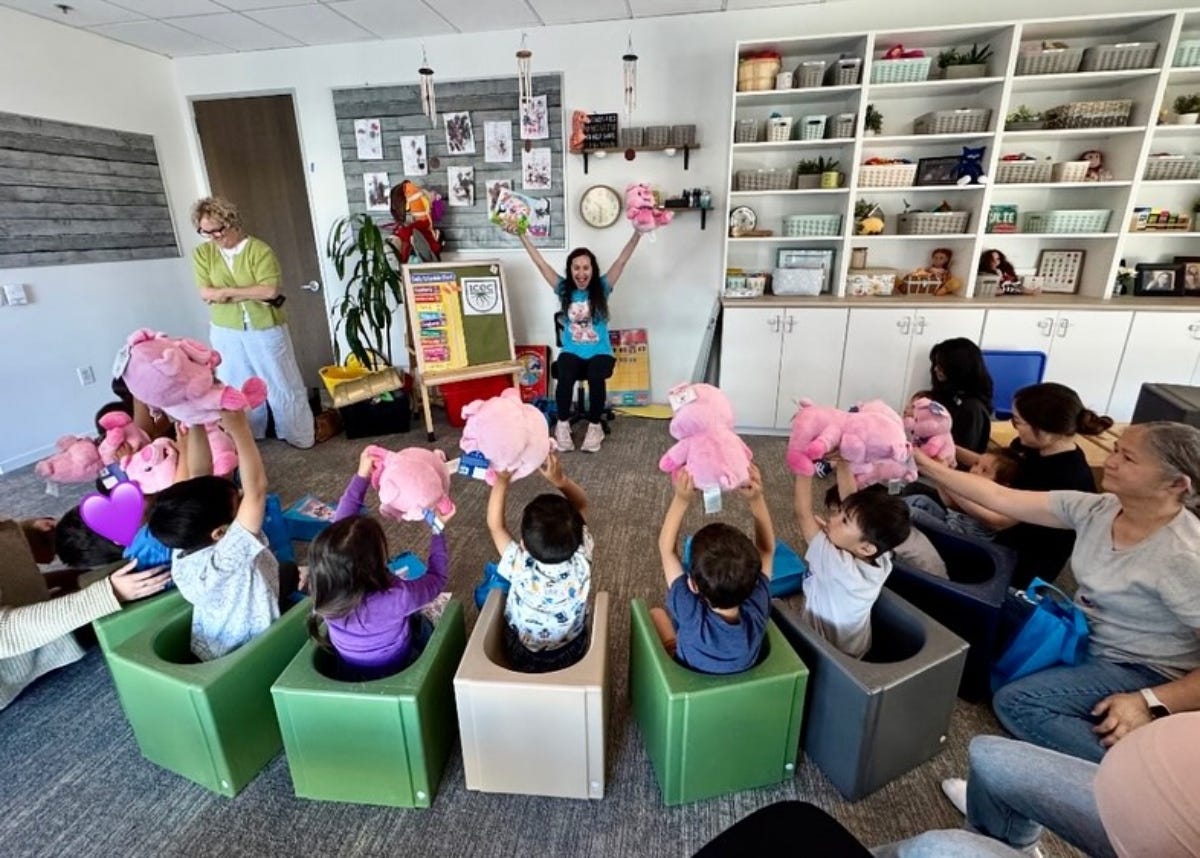
I love this question! For younger children, my first book “The Power of Piggie Bear” is a great book to help children identify and manage their emotions in fun and loving ways. Piggie Bear teaches about his deep belly breathing and the power of self-hugs. https://elfempowers.org/resources/, there are a variety of resources for children and for adults which are fun and easy to do.
Wonderful. We are nearly done. Is there a person in the world, or in the US, with whom you would like to have a private breakfast or lunch, and why? He or she might just see this, especially if we tag them. 🙂
Mayim Bialik!! I love how open she is about her mental health struggles and how she works to reduce stigma surrounding mental health issues. She also seems very open to holistic healing practices, which have transformed my life! We both grew up in Jewish families so we probably have similar mishigos as a result lol.
This was very inspiring. Thank you so much for joining us!


